Interview by Trine Bastian, Head of Communications, AJ Vaccines
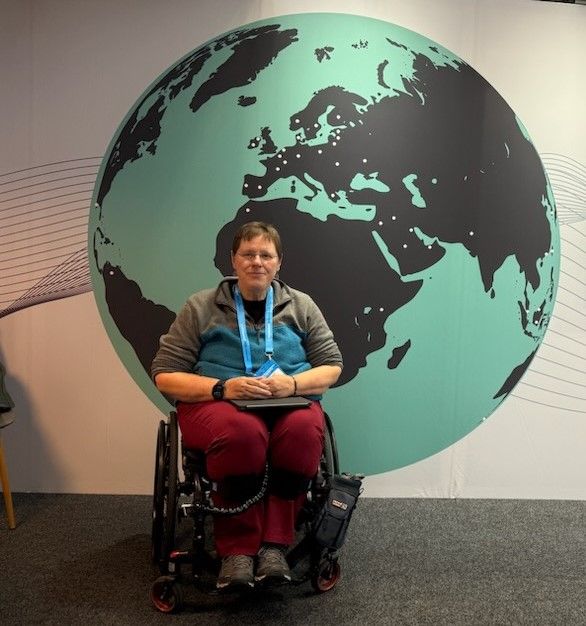
Kathy Fiekert is the Team Lead for Health System Solutions and Community-Based Approaches at KNCV TB Plus and Technical Lead for KNCV’s People-Centred Framework for TB programming and its Stigma Reduction & Social Protection initiatives. Kathy has worked with tuberculosis (TB) and public health since the early 1990s. Early in her career, she realised that TB is not only an infectious disease. It is also a social disease that develops on top of other pressures in people’s lives: poverty, overcrowded housing, poor ventilation, dusty working conditions and lack of proper nutrition.
We spoke with her during the Union World Conference on Lung Health 2025 in Copenhagen about why the narrative around TB needs to change – and what that means in practice.
You’ve said that TB is both an infectious and a social disease. What do you mean by that?
Kathy Fiekert:
When we talk about TB only as an infectious disease, we miss half the picture.
Of course TB is caused by bacteria, and we have to treat it medically. But TB very often develops on top of other things: people living in very close proximity, badly ventilated rooms, dusty workplaces that damage the lungs, poor nutrition and unstable income. It affects entire families, especially when the person who falls ill is the main breadwinner.
If we ignore those conditions, we are just chasing the bacteria without addressing what made people vulnerable in the first place. That is why I call TB a social disease as well.
You also work a lot on the distinction between latent TB infection and active TB disease. Why is that so important?
Kathy Fiekert:
Medically, the distinction is clear. Latent TB means someone has been infected but is not ill and not infectious. Active TB disease means the person has symptoms and can transmit the disease if it is in the lungs.
For the public, this is often very confusing. In many places, people just hear “TB” and think: “I am dangerous, I will be excluded, I may lose everything.” That fear doesn’t depend on whether we are talking about latent infection or active disease.
If people don’t understand the difference, they may refuse testing, hide their diagnosis or avoid follow-up. So a technical distinction that is very obvious for professionals becomes a big emotional barrier in real life.
You co-authored a study on Eritrean refugees in the Netherlands. What did that tell you about stigma and misunderstanding?
Kathy Fiekert:
We found that many people struggled to understand what their test results meant. The difference between latent infection and active disease was not clear to them, and they worried about what a TB label could mean for their residence status, their work and their standing in the community.
If you think that coming forward for testing might lead to deportation, you are less likely to come. Some people would rather hide their disease than risk that. That is a very rational response if the system feels threatening.
We see similar patterns elsewhere. When TB is strongly associated with poverty, migration or “otherness”, people are afraid of being judged or excluded. They don’t want their employer or landlord to know. The result is that they stay away from care until they are very sick.
What does stigma look like in practice and why is it so difficult to address?
Kathy Fiekert:
Stigma is not a single thing. It looks different from place to place.
That is why the first question should not be, “How do we stop stigma?” but “What does stigma look like here?” Who are people afraid of? What stops them from going to the health centre? Is it fear of being gossiped about, losing a job, being sent away, or something else?
Just saying “do not stigmatise” does not work. Stigma is based on fear, and fear is very powerful. We also use fear a lot in public debates – sometimes even as a tool – and that can backfire badly. Think of fake news, rumours and messages that make people feel ashamed rather than supported. All of that harms people on the ground. They will not come forward, and in the end they harm themselves too.
If we want to change that, we need more than facts. We need empathy and storytelling. We need to listen to how people feel, not only correct what they know.
You’ve said “the narrative has to change”. What kind of narrative do we need instead?
Kathy Fiekert:
We need to move away from TB as a private shame and talk about it as a public health issue.
Take a simple example: an employer finds out that one staff member has TB. The reflex might be to isolate that person, label them as a risk and create fear in the workplace. But there is another way.
Within about two weeks of effective treatment, most people with TB are no longer infectious. So instead of focusing on one “problem person”, you can offer TB screening to all staff, give clear information and make sure the person affected receives good care. That is what a public health approach looks like.
On a larger scale, if we invest in early diagnosis, preventive treatment and vaccination, we can push TB down significantly. If we don’t invest now, the problem may become almost unmanageable. Drug resistance is rising, vaccine fatigue is real, and in some countries people have forgotten that TB is still there. In the UK, for example, some people think it is “only a migrant problem”. That kind of complacency is dangerous.
We are all living in the same world. No one is really safe if not everyone is safe.
What are the broader public health consequences of TB-related stigma?
Kathy Fiekert:
The most obvious consequence is that people avoid services. About a third of people with TB are still not diagnosed or reported. They are out there, living their lives, getting sicker and potentially transmitting the disease. Many of them are in groups that are already hard to reach.
Stigma makes all of that worse. If people are afraid of being exposed, blamed or punished, they come late or not at all. That means more severe disease, higher costs for the health system and a higher risk of ongoing transmission and drug resistance.
So stigma is not just a “soft” social issue. It is a very concrete public health problem.
What can health systems do differently to reduce stigma and improve the TB response?
Kathy Fiekert:
First, you have to listen. Ask people what keeps them away. Is it the opening hours, the way staff speak to them, the location of the clinic, the fear of being seen? Then you can start changing those things.
Second, look at the language. If TB is always framed as something that happens to “others” – to migrants, to the poor, to the irresponsible – you reinforce the very stigma you want to reduce.
Third, work with communities. We have seen creative approaches in different countries – for example, bringing services to places that are open 24/7, or partnering with community leaders who can talk about TB in a calm, normalising way. When people hear from someone they trust that TB is treatable and that seeking care is the responsible thing to do, it changes their behaviour.
And finally, remember that storytelling matters. Facts are essential, but if they are delivered without empathy, they can still push people away.
How can companies and research institutions contribute to these solutions?
Kathy Fiekert:
They can start by seeing themselves as part of a wider ecosystem, not as separate from it.
Companies and research institutions can support community-based work, help design services that fit people’s lives and use their platforms to promote a more balanced narrative about TB. They can also partner with programmes and networks that already work closely with affected communities, instead of reinventing the wheel.
In my work, we collaborate with communities and health authorities to inform global guidelines in partnership. We translate data from programmes into practical advice for countries – and we have seen places like Nigeria, Indonesia and Ethiopia make real progress when there is political will and community engagement.
The key is to ask: are we doing this with people, or to them?
What do you hope policymakers take away from your work?
Kathy Fiekert:
I hope they understand that TB is not just a medical challenge you can fix with a few technical tools. It is deeply shaped by inequality, by living conditions and by the stories people tell themselves about the disease.
If policymakers take stigma and social factors seriously, invest in early diagnosis and prevention, and work in partnership with communities, we have a real chance to change the trajectory. If they treat TB as something that belongs only to “others”, we will keep missing people and the disease will continue to exploit those gaps.
The narrative has to change – from blame and fear to responsibility and care.
Why voices like Kathy’s matter
For AJ Vaccines, conversations with experts like Kathy Fiekert are a reminder that TB is both an infectious and a social disease. How we talk about it – and how we design services around people’s lives – directly shapes who gets diagnosed, who receives treatment and who is left behind.
Her perspective highlights that stigma and misunderstanding are not side issues, but central barriers to ending TB. By listening to those who work at the intersection of science, communities and policy, we can better align our own TB portfolio and partnerships with the realities people face every day.
This interview was conducted at the Union World Conference on Lung Health 2025 in Copenhagen as part of our “Voices in the Fight Against TB” series, highlighting perspectives from advocates and experts working every day to end tuberculosis (TB).